


Page 527 - 2026 catalogue
P. 527
Fabric┃ Information Fabric Sustainability
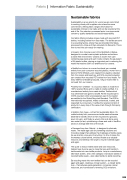
Sustainable fabrics
Sustainability is a key priority for us and we are committed
to working closely with suppliers who share the same
commitment, offering fabric ranges which allow for
sustainable choices to be made and can be recycled at the
end of life. Our selection processes factor in environmental
concerns, quality standards and social responsibility.
Our fabric offering includes ranges made with recycled PET
bottles, including bottles from sea waste. The bottles are sent
to a recycling factory, where they are shredded into flakes,
processed into chips and then extruded into filaments. This is
then turned into yarn ready for weaving.
• Oceanic from Camira is part of the SEAQUAL Initiative,
designed to combat marine plastic pollution and achieve
a waste free environment. Oceanic is woven from yarn
containing sea waste and each metre contains the equivalent
of 26 plastic bottles, playing an important part in reducing the
waste that reaches both our landfills and our oceans.
• Sealife from Inloom is a cross-functional yarn created
entirely from post-consumer recycled plastics, woven from a
blend of 50% SEQUAL yarn created from plastics collected
from the oceans and beaches, and 50% recycled polyester
yarn created from recycled PET bottles from land waste. For
every 50M roll of Sealife produced, 12kg of marine litter is
removed from our oceans.
• Earthly from Chieftain - is a luxurious fabric is made from
100% recycled fibres and is cradle to cradle certified. It is
manufactured entirely from waste textiles. Textiles which
may otherwise have gone to landfill. All the recycled yarns
(100% recycled cotton and polyester) used in its creation
are certified to the Global Recycled Standard. The GRS is
internationally recognised, widely understood, trusted, and
respected by consumers. It verifies the recycled content of
products in every step of the value chain through third-party
certification.
• VerdEco from Agua – is their first sustainable fabric. It’s
crafted entirely from preconsumer textile waste otherwise
destined for landfill, which is then recycled into granules,
spun into yarn, and finally re-woven; this is all done using
zero water (in fact, upholstering a three-seat sofa in VerdEco
saves on average 250 litres of the stuff).
• Renewed loop from Gabriel – is designed to eliminate
waste. The waste age calls for pioneering solutions and
innovative design that address the challenges of textile waste.
As we all enter a new era of recycling, it is time to leave the
throwaway culture behind, embrace waste as a valuable
resource, and develop new ways to recycle materials again
and again.
The quest to reduce textile waste and save resources,
Gabriel have found a way to close the loop and transform
textile waste into new textile products. Loop is a revolutionary
take-back system, and a new category of products based on
recycled textile waste – also called textile-to-textile recycling.
By recycling waste into new textiles that can be recycled
again and again, creating a circular system – a closed textile
loop – that reduces waste generation, conserves natural
resources, and contributes to lowering CO2 emissions.
MFC & FABRIC
525


